![fully-fitted-belgium.jpg]()
More people in Brussels and across Belgium are building a second income alongside their main job. A consulting gig in the evenings, a small online shop, freelance design work, or a “nevenactiviteit” registered on the side has become a normal part of working life rather than an exception. As that side income grows, the informal setup that worked at the start, a laptop at the kitchen table or a corner in a café, starts to show its limits.
Why Side Hustles Are on the Rise in Belgium
Belgium has clear rules for running a secondary activity alongside employment, and a fair number of freelancers and employees are making use of them. Whether registered as a “activité complémentaire” or “bijberoep,” side businesses in consulting, e-commerce, coaching, translation, and creative services have become common across Brussels, Antwerp, and Ghent.
Part of this growth mirrors a wider international pattern. A recent Allwork.Space report described remote workers around the world quietly holding several jobs at once and earning well beyond a single salary as a result. Belgium’s strong remote work culture, high broadband penetration, and large base of EU-adjacent consultants and contractors make it fertile ground for the same trend.
The challenge is that a side hustle registered as a secondary activity is still a real business in the eyes of clients, suppliers, and tax authorities. It needs an address, a way to receive calls professionally, and somewhere to meet people that is not a living room. Getting this right early avoids a scramble later when the side project starts bringing in serious revenue.
The Limits of Working from Home or a Café
A home office or a café table is a reasonable place to start a side hustle, but a few issues tend to surface once things pick up.
- A residential address on invoices and correspondence looks less established to Belgian and international clients alike.
- Public Wi-Fi at cafés is rarely secure enough for handling client files, contracts, or payment information.
- Café noise and time pressure make calls and video meetings harder to run smoothly.
- Keeping a home address off business paperwork is a common and reasonable preference for privacy, particularly for anyone doing client-facing work.
These are not reasons to abandon a side hustle. They are simply signs that the setup needs to catch up with how seriously the business is being taken by the people paying for it.
What a Virtual Office Brings to a Belgian Side Hustle
A virtual office gives a side business a prestigious Brussels address, without the cost of leasing space that sits empty most of the week. It comes with a local Belgian phone number answered by a dedicated receptionist, mail handling for post and couriers, and access to meeting rooms when a client visit is actually needed.
For anyone registering a secondary business activity in Belgium, having an address in a recognised commercial building, such as the Leopold Quarter or the European Quarter in Brussels, adds a level of credibility that a home address simply cannot match. It also matters for anyone working with EU institutions, multinational clients, or international partners who expect a professional-looking base of operations. Many virtual office packages include a set number of coworking hours each month, which covers the occasional day a proper desk is genuinely required.
When Coworking Is the Better Fit
A virtual office suits a side hustle that runs mostly from a laptop with occasional client contact. Some side businesses need more than that fairly quickly. Anyone running client workshops, filming content, or simply struggling to focus at home after a full day at their main job tends to benefit from a dedicated place to work.
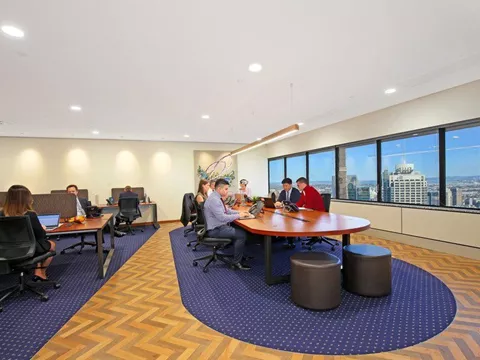
Coworking spaces in Brussels give access to a proper desk, fast and secure internet, printing, and bookable meeting rooms on flexible terms, with no long-term lease required. A desk can be booked for a few evenings a week around a main job or used on an as-needed basis when the home setup is not working.
Being in a shared space with other founders and freelancers also tends to generate referrals and collaborations that rarely happen when working alone at home. For a side hustle trying to grow past its first few clients, that network effect can matter as much as the desk itself.
Registering a Side Activity in Belgium
Setting up a side hustle properly in Belgium involves a handful of clear steps.
|
Step
|
What it involves
|
|
Register the activity
|
Declare a secondary occupation (“bijberoep” or “activité complémentaire”) with the relevant authorities
|
|
Get a VAT number
|
Required once turnover passes the applicable threshold or the activity is not exempt
|
|
Secure a business address
|
Needed for registration, invoicing, and correspondence
|
|
Open a business account
|
A registered address and business number make this considerably easier
|
|
Check employer terms
|
Some employment contracts require notifying an employer about outside professional activity
|
A virtual office address satisfies the business address requirement for registration and invoicing, which is why it is a common choice for people formalising a side activity without renting a full office.
Matching the Setup to the Side Hustle
The right choice depends on how hands-on the work actually is. A virtual office fits consultants, freelance service providers, and online sellers who work mainly from a laptop and need a credible address, a local phone number, and somewhere to meet a client now and then. A coworking desk fits better for anyone who needs regular, focused working time away from home, records content or runs in-person sessions with clients.
Many people in Brussels start with a virtual office and add coworking hours as the side hustle grows, using Servcorp’s Brussels locations at Bastion Tower or Schuman to scale up without signing a lease.
Frequently Asked Questions